You love them. That is why this week is hard. Nobody tightens up over people they do not care about. By Wednesday night there is a list on the counter, a long drive ahead, and a table to fill with people who each remember the last holiday a little differently. Your head calls it a busy week. Your body calls it something else, and your body is the one that keeps the receipt.
Your Body Does Not Know It Is Only Thanksgiving
Your body has one alarm, and it uses the same one for everything. A car cutting you off on 85 and a hard look across the dinner table flip the same switch. The American Psychological Association says it plainly: when the body is stressed, muscles tense up. It is close to a reflex, the body's way of guarding against injury and pain.
That guard is built for a short burst. Brace, get through it, let go. A holiday is not a short burst. It is a week of small alarms with no all clear in between. Picture a car in the driveway with a foot on the gas and the gear in park. The engine roars, nothing moves, and everything under the hood gets hot. That is your body on a tense holiday weekend.
Where The Holiday Lands In Your Body
Stress does not spread out evenly. It picks the same few places every time.
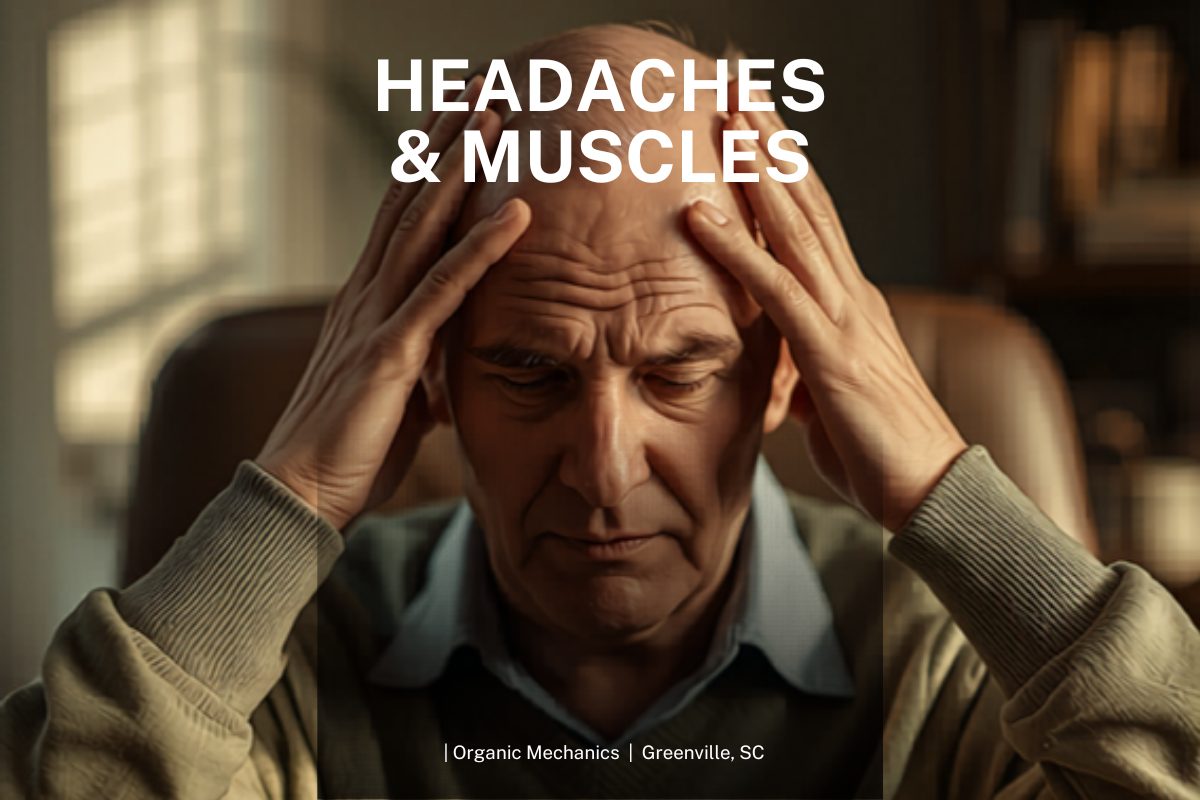
Your jaw. You bite down when you are holding something back. The muscles that close your jaw are some of the strongest you have for their size, and they can stay clamped through a whole conversation without you noticing. You feel it later as an ache at the temples, a sore face in the morning, or a headache that starts in front of your ears. I wrote more about that in my post on TMJ and jaw pain.
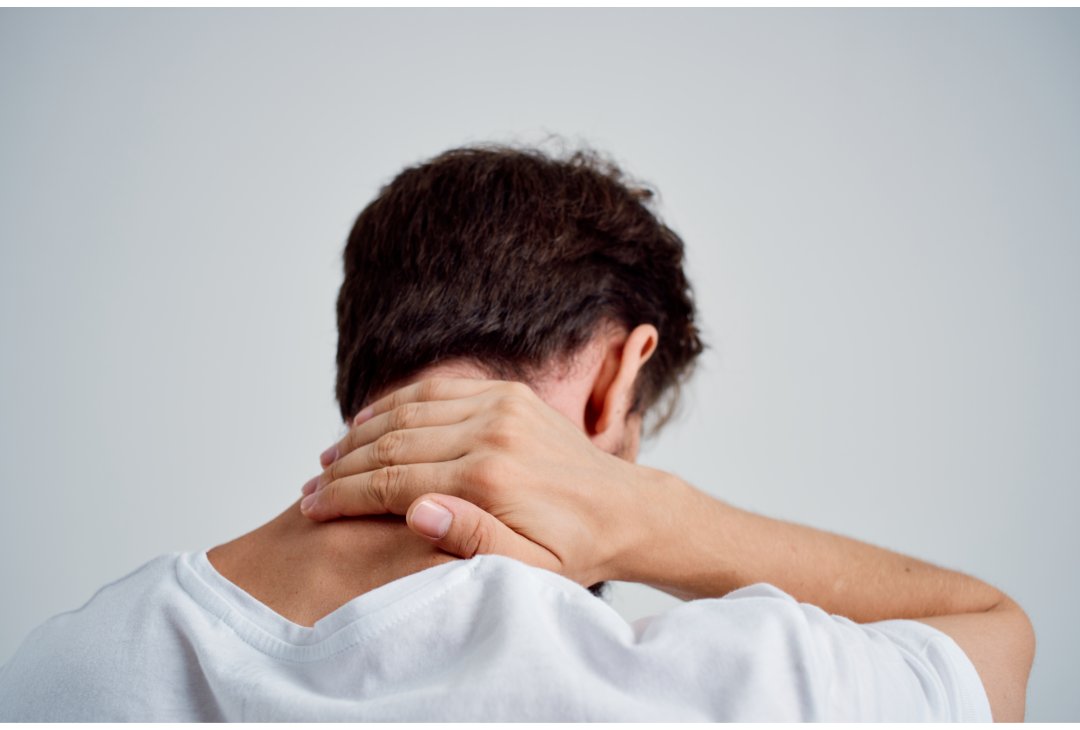
Your neck and shoulders. Watch anyone who is tense and you will see their shoulders creep up toward their ears. The muscles that lift them run from the shoulder blade to the neck and the base of the skull. Hold them tight for hours and you get a stiff neck, a band of pain across the top of the shoulders, and the headache that starts at the back of your head and wraps around to your eye. That is the muscle side of a headache.
Your breath. Stress moves your breathing up into your chest. Small muscles on the side of your neck start lifting your ribs with every breath, thousands of times a day, a job they were never built to do alone. They get tight and tired, and your neck pays for it.
Your low back and hips. This one is less about feelings and more about furniture. Hours in a car seat. Hours standing at a counter. A soft couch and a guest bed that folds in the middle. The deep muscles of your hips and low back shorten when you sit and strain when you stand still, and Thanksgiving asks for both on the same day.
How One Holiday Stacks It All Up
Take the week apart and you can watch it build.
- Wednesday, the drive. Hips bent, hands tight on the wheel, eyes locked on brake lights. You climb out of the car already stiff.
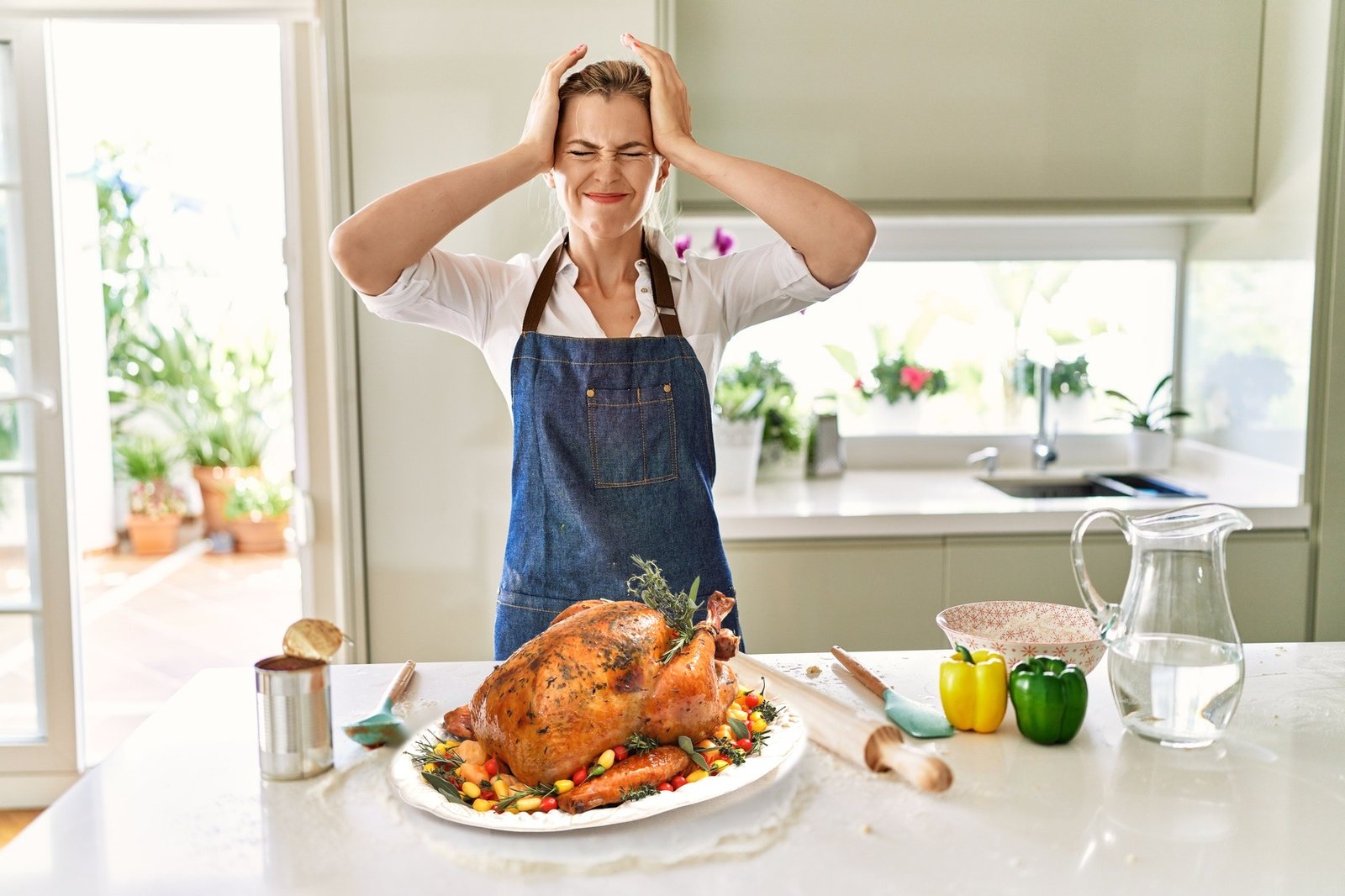
- Thursday morning, the kitchen. Hours on your feet, bent over a counter, then a twenty pound bird to lift out of a low oven. Your low back does the lifting your legs should.
- Thursday afternoon, the table. This is where the jaw and shoulders go to work. Old stories, strong opinions, and a question about your life you did not want to answer.
- Thursday night, the guest bed. A strange pillow, a thin mattress, or a couch. Your neck spends eight hours in a position it would never pick.
- Friday and Saturday, the extras. A morning race you did not train for. A football game in the yard. Six hours of shopping on hard floors. A tree to haul and boxes to carry down from the attic.
- Sunday, the drive home. Same seat, same grip, with four days already stacked in your muscles.
Why It Hurts After, Not During
While the week is happening you have a job to do, and you run on adrenaline to do it. A lot of people do not feel much on Thursday. It shows up Sunday night or Monday morning, when the house is quiet and the guard finally comes down. You turn your head to back out of the driveway and your neck says no. You wake up with a headache and blame the pillow. Your low back pulls in a way it did not last week.
It did not come from nowhere. Your muscles held a brace for days, and a muscle that braces long enough forgets how to let go. That is the after part of Thanksgiving. If nothing changes, it rolls straight into December with you.
Stress is a foot on the gas with the car in park. Nothing moves, and everything under the hood wears out.
How Neuromuscular Therapy Stops Stress In Its Tracks
Telling a tense muscle to relax does not work. You have already tried. A muscle that has been on guard for days takes its orders from your nervous system, and your nervous system still thinks there is something to guard against.
Neuromuscular therapy goes to the source. I find the exact muscles holding the brace, and inside each one I find the tight, tender spot that keeps it switched on. Most people call it a knot. The proper name is a trigger point. I put slow, precise pressure on that spot and hold it until the muscle lets go. You feel it happen. The ache fades under my hand, your shoulder drops, and somewhere in the middle of it you take the first deep breath you have had all week.
That breath matters. It is your nervous system getting the message that the danger is over. When the jaw, the neck, the shoulders, and the breathing muscles stop sending alarm signals, the whole system idles down. The foot comes off the gas. That is what I mean by stopping stress in its tracks. I am not talking you out of it. I am taking it out of the muscles that are carrying it.
This is not only my opinion. The same APA page notes that relaxation techniques and other activities that relieve stress have been shown to reduce muscle tension and cut down on stress related problems like headaches. If you want the longer story of how tension turns into pain, I wrote about it in how stress creates physical pain.
Where Sports Therapy Comes In
Thanksgiving is a sports weekend, whether you planned it that way or not. People who have not run since summer line up for a turkey trot. Cousins who sit at desks all year go deep for a pass in the back yard. Somebody always decides this is the weekend to haul the tree and hang lights from a ladder.
A body that sat all fall and then sprints on Thursday is how hamstrings get pulled and calves lock up. Sports therapy is the work I do for bodies in motion. Before the event, I get the tight spots out of your calves, hamstrings, and hips so they can take the load. After it, I work the sore muscles so you recover faster, and I catch the small strain before it becomes the thing you limp on until Christmas.
Stress and sport feed each other. A tight, guarded body moves worse, and a sore, tired body handles stress worse. I treat them together because they show up together. If you are running this week, my guide to running injuries shows which muscle is behind each one.
Five Things You Can Do At The Table
These take seconds, not minutes, and nobody at the table will know you are doing them.
- Drop your shoulders. Breathe out and let them fall away from your ears. Check again in ten minutes. They will be back up.
- Unclench your jaw. Lips together, teeth apart, tongue resting on the roof of your mouth.
- Breathe low and slow. In through your nose for a count of four, out for a count of six. Three rounds. The long breath out is the part that settles you.
- Get up and move. Stop every hour on the drive. Walk for ten minutes after the meal. Sitting still is where the tightness sets.
- Fix the guest bed. Bring your own pillow. If you sleep on your side, put a second pillow between your knees.
None of this undoes a week of bracing. It keeps the stack from getting as high. For the guest bed, my post on the best sleeping positions for muscle pain has the rest.
Do Not Carry It Into December
Thanksgiving is opening day of the season, not the end of it. Whatever your muscles are holding on Sunday night is what you start December with, and December has a list of its own.
If you feel it building already, come in before the holiday and walk into it loose. If it caught you on the back end, come in after and let me take it out before the next round. Your first visit is a full sixty minutes, one on one with me. I find where you are holding it, I release it, and I show you what to watch for. Follow up visits are thirty minutes and go straight to the problem. You can book online any time, day or night.
Greenville, This Is Your Week
The week of Thanksgiving, Greenville is on the move. Families load up for the drive to Columbia, Charlotte, Atlanta, or the coast, and other families are driving here. 85 and 385 back up for miles. Kitchens from Greer to Simpsonville run hot from sunrise. On Friday, Woodruff Road fills up before the stores open. It is a good week and a hard one, and your body feels both. Take care of the people at your table. Then let me take care of you.