
It is 2 a.m. and you are awake again, hunting for a position that does not hurt. Left side, right side, flat on your back, one leg out of the covers. Nothing works for long. Here is the part most people never think about: whatever position you settle into, your muscles hold it for hours. Sleep is the longest single posture your body practices, every night of your life. Get it right and the night repairs you. Get it wrong and you wake up worse than you went to bed.
If Your Low Back Hurts
Sleep on your side with a pillow between your knees. That one change keeps the top leg from dragging your pelvis into a twist and lets the low back muscles actually rest instead of guarding all night. If you are a dedicated back sleeper, slide a pillow under your knees instead. It softens the arch in the low back that flat leg sleeping forces. What you are looking for is a spine that stays in one line from tailbone to skull.
If Your Neck And Shoulders Hurt
The pillow matters more than the mattress here. Side sleepers need a pillow tall enough to fill the space between the ear and the shoulder, so the neck is not bending downhill all night. Back sleepers need a flatter one, or the head gets pushed forward into the same position you hold at a desk all day. And if you sleep with your arm under the pillow, under your head, or stretched overhead, that shoulder is spending eight hours in an impingement position. Bring the arm down and hug a pillow instead.
The Position Making Yours Worse
Stomach sleeping. I know somebody reading this has slept on their stomach for forty years, but the mechanics do not care. To breathe, your head has to turn hard to one side, which puts the neck at the end of its rotation and holds it there for hours. The low back sags into the mattress at the same time. It is the only common position that punishes both ends of the spine at once. If you cannot quit it outright, start the night on your side with a body pillow against your chest. It gives your front the contact it wants without the neck twist.
A good position gives your muscles the night off. A bad one gives them a second shift.
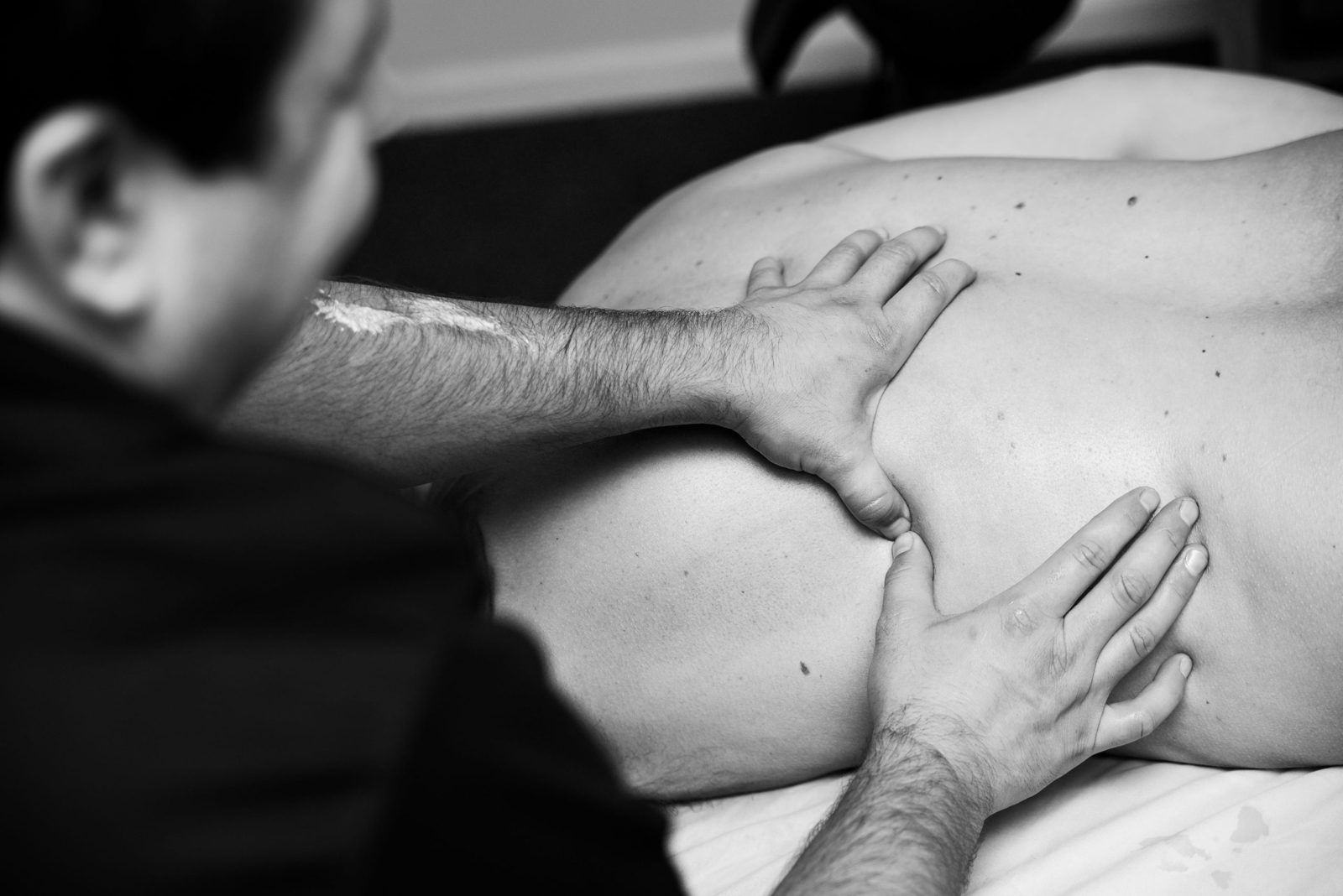
If better positioning alone does not settle the pain, someone who is more than a massage therapist in Greenville SC can release the trigger points that keep waking you.
When A Better Position Is Not Enough
Here is the honest part. If your muscles are healthy, fixing your position usually fixes your nights within a week or two. But if you have changed the pillow, changed the position, and pain still wakes you at 2 a.m., the problem is not how you are lying. It is the tissue itself. Muscles loaded with trigger points and bound down fascia do not relax just because you gave them a better posture. They stay switched on all night, and they will wake you in any position you choose. I wrote about why tight muscles steal your sleep if you want the full mechanism.
What I Do About It In My Greenville Office
Neuromuscular therapy finds the specific muscles that will not switch off and releases them by hand. Patients who have not slept a full night in months are usually not broken, they are guarded, and guarded tissue can be released. I assess where the restriction actually lives, treat it, and then your improved sleeping position finally gets the chance to do its job. Better position plus released tissue is how the 2 a.m. wake ups end. One without the other is why they have not ended yet.