
You stretch. You foam roll. You take the hot shower. And that knot between your shoulder blades is still there Monday morning, the same as it was in March. If that sounds familiar, the problem may not be the muscle at all. It may be the wrapping around it.
The Wrapping Around Your Muscles
Every muscle in your body comes wrapped in a thin sheet of connective tissue called fascia, one continuous web running from your scalp to your feet. When fascia is healthy, it glides. When it gets injured, overworked, or parked in one position all day at a desk, it thickens and binds down like a wrung out towel. The muscle underneath can be perfectly healthy and still feel tight, achy, and restricted, because the wrapping will not let it move. I wrote a full explainer on how fascia tissue works if you want the deeper story.
You cannot stretch your way out of a binding problem. You have to release the binding.
What Myofascial Release Actually Is
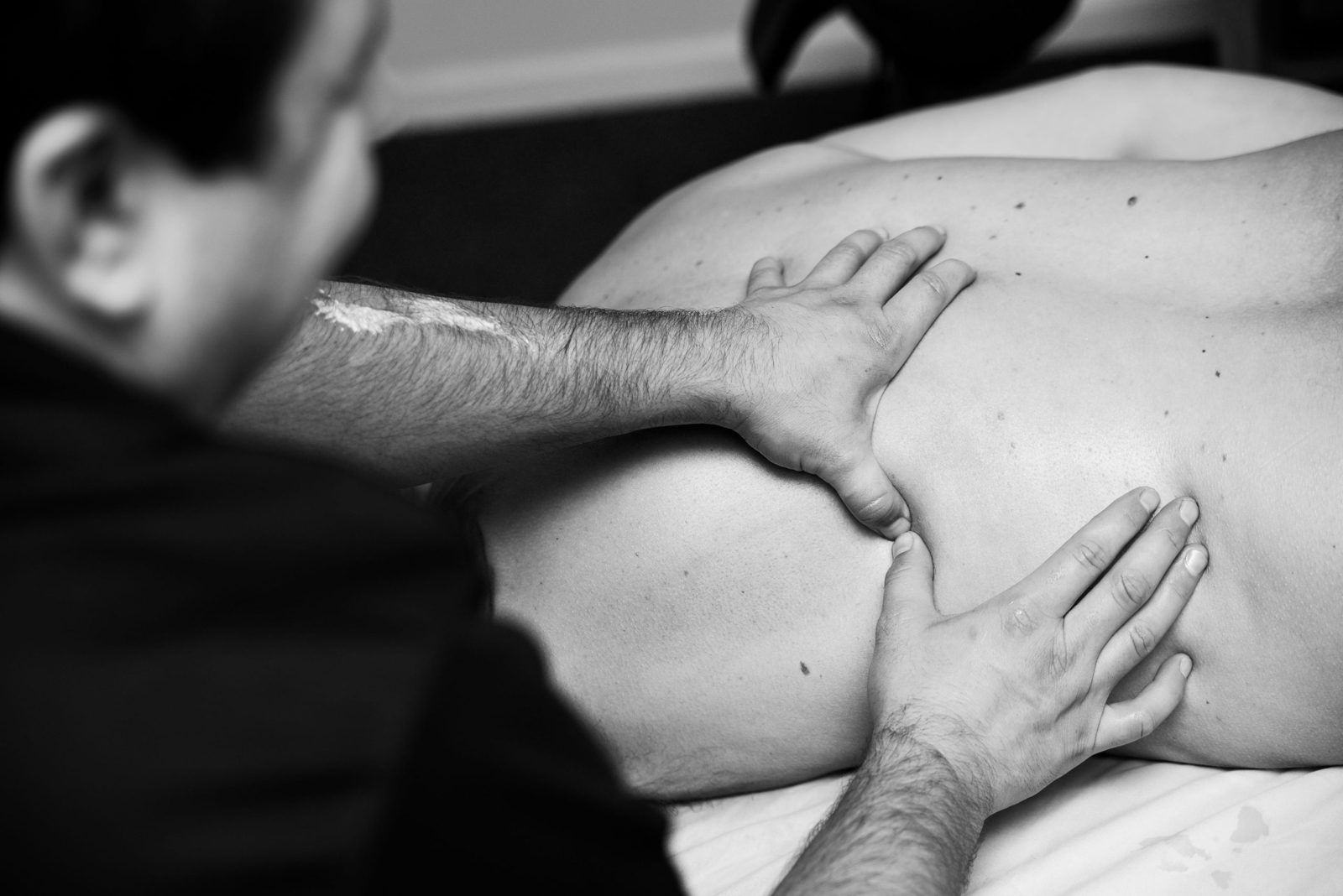
Myofascial release is hands on work aimed at the fascia itself. Instead of the fast gliding strokes most people picture when they hear the word massage, myofascial release uses slow, sustained pressure that sinks into the restricted tissue and waits. Fascia does not respond to force. It responds to time. Held long enough, the tissue softens, the binding lets go, and the muscle underneath finally gets to do its job again.
At my practice it is not a spa add on. It is a clinical tool I use inside a neuromuscular therapy session, guided by an assessment of where your body is actually restricted, not just where it hurts. Pain is loud, but it is usually the last place a problem shows up, not the first place it started.
What It Helps
Patients come to me with neck and shoulder tension that never leaves, headaches that start at the base of the skull, low back tightness from years of sitting, plantar fasciitis, old injuries that healed wrong, and the whole body stiffness that creeps in after a decade of favoring one side. Myofascial restriction plays a part in nearly all of it. Releasing it will not fix everything by itself, but very little gets fixed without it.
What A Session Feels Like In My Greenville Office
Slow. Deep without being brutal. Most patients describe a stretching, warming, melting sensation as the tissue releases, followed by a kind of looseness they have not felt in years. You will not get the light lotion glide of a resort massage, and you will not get an elbow through the ribs either. Sustained, intelligent pressure, in the places the assessment says need it.
How Many Sessions It Takes
The honest answer is that it depends on how long the restriction has been there. Tissue that spent ten years binding down does not release in one afternoon. Many patients feel a real difference after the first visit, and most chronic patterns need a series of sessions to fully change. I will tell you what I find in your first assessment and give you a straight answer about what your body needs. I do not guess, and I do not sell packages people do not need.