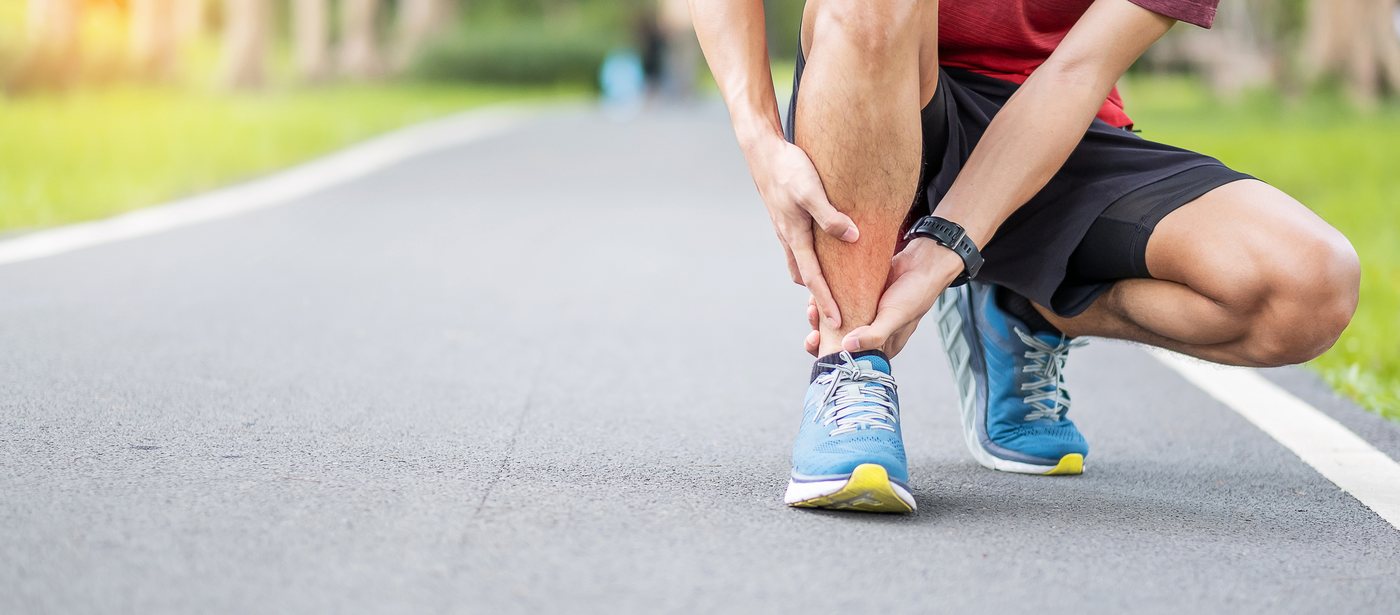
Spinx Run Fest was Saturday. By Monday I know exactly who is coming in: the half marathoner whose shins started screaming at mile nine, the guy whose Achilles was fine until the Pelham Road hill, and the first timer who finished the 5K and cannot get down the stairs. I have been working on Greenville runners for eleven years, on this table, and the pattern does not change. The research says somewhere between a third and half of runners get hurt in any given year, and the knee, the shin, the foot, and the Achilles take most of it. What the research does not tell you is the part I see every day: the place that hurts is where the chain broke. It is almost never where the problem started. This article walks you through each of the common running injuries, names the muscle that is actually behind it, and tells you plainly what I do about it.
Shin Splints: The Deep Calf Pulling On The Bone
The medical name is medial tibial stress syndrome, and the name tells you everything about how it gets treated badly. People hear “stress” and “bone” and get told to rest it, ice it, buy new shoes. Then they rest it, it feels better, they run, and it comes right back. Here is what is going on. The soleus, the flat muscle under your big calf muscle, and the deep toe flexors next to it attach straight onto the inside edge of your shin bone. Every stride, those muscles fire to control your foot as it lands. When they are tight, knotted, and overworked, they pull on that bone edge thousands of times a run, and the lining of the bone gets angry. That ache down the inside of the shin is the muscle yanking on it.
So I do not treat the shin. I treat the soleus and the deep calf, the trigger points that make them short, and the stiff ankle that is making them work twice as hard. Most shin splints I see also come with a calf that has not been able to fully lengthen in months, and a foot that collapses inward on landing because the hip above it is not holding the leg straight. When the calf lets go and the ankle moves again, the pulling stops, the bone calms down, and the runner goes back to running. One honest line: there is no study that proves any single treatment for shin splints, mine included. What I can tell you is what happens on my table, over and over, when the right muscle finally releases.
Achilles Pain: It Is The Calf, Every Time
The Achilles tendon is the rope. The calf is the thing pulling the rope. When patients come in with a tendon that is thick, tender, and stiff in the morning, the first thing I check is not the tendon; it is the two calf muscles above it. A short, knotted gastrocnemius and soleus keep constant tension on that tendon all day, not just when you run, and a tendon under constant tension never gets the slack it needs to heal. Add hills, add speed work, add a new pair of shoes with a lower heel, and the tendon starts to break down faster than it can repair.
The best evidence for Achilles pain is loading: slow, heavy heel raises done the right way for weeks. I agree with it and I send every Achilles patient home with it. But loading a tendon that is being strangled by a locked calf is like doing rehab with the parking brake on. My job is to take the brake off first. I release the calf, the soleus, and the fascia that wraps them, I free up the ankle, and then the loading actually works. Patients who have been doing heel raises for two months with no change usually feel the difference in the first week once the calf is handled.
Runner’s Knee And IT Band Pain: Start At The Hip
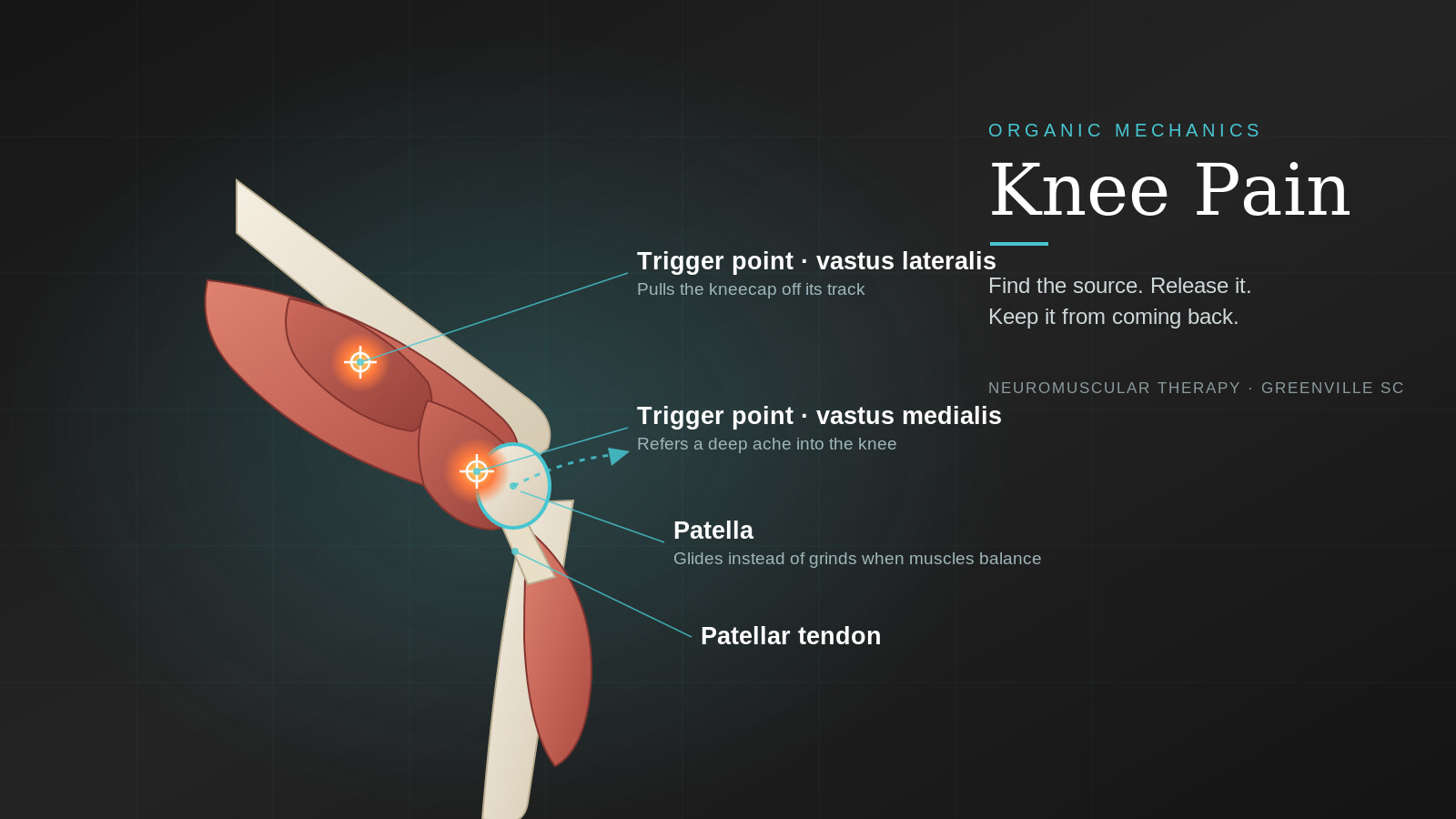
I wrote a whole article on runner’s knee and the IT band, so here is the short version. The knee is a hinge caught between the hip and the foot, and when the hip does not control the leg, the knee pays. Weak or inhibited glute medius lets the thigh drift inward on every landing; the research on IT band pain in distance runners found exactly that, weaker hip abductors on the hurt side. The tensor fasciae latae on the front of the hip takes over the job, tightens the IT band from the top, and the outside of the knee lights up. Pain under or around the kneecap works the same way from a different angle: the quad and the hip pull the kneecap off its track.
Foam rolling the IT band does not fix this, because the IT band is not the problem, the muscles tightening it are. I release the TFL, the glute medius and minimus, the lateral quad, and whatever is locking the hip, then we rebuild the hip control so the knee stays stacked over the foot. Knees that have hurt for a year often change in two or three visits once the hip is addressed, because the knee was never the injury; it was the victim.
The place that hurts is where the chain broke. It is almost never where it started.
Plantar Fasciitis: The Foot Is The Last Link
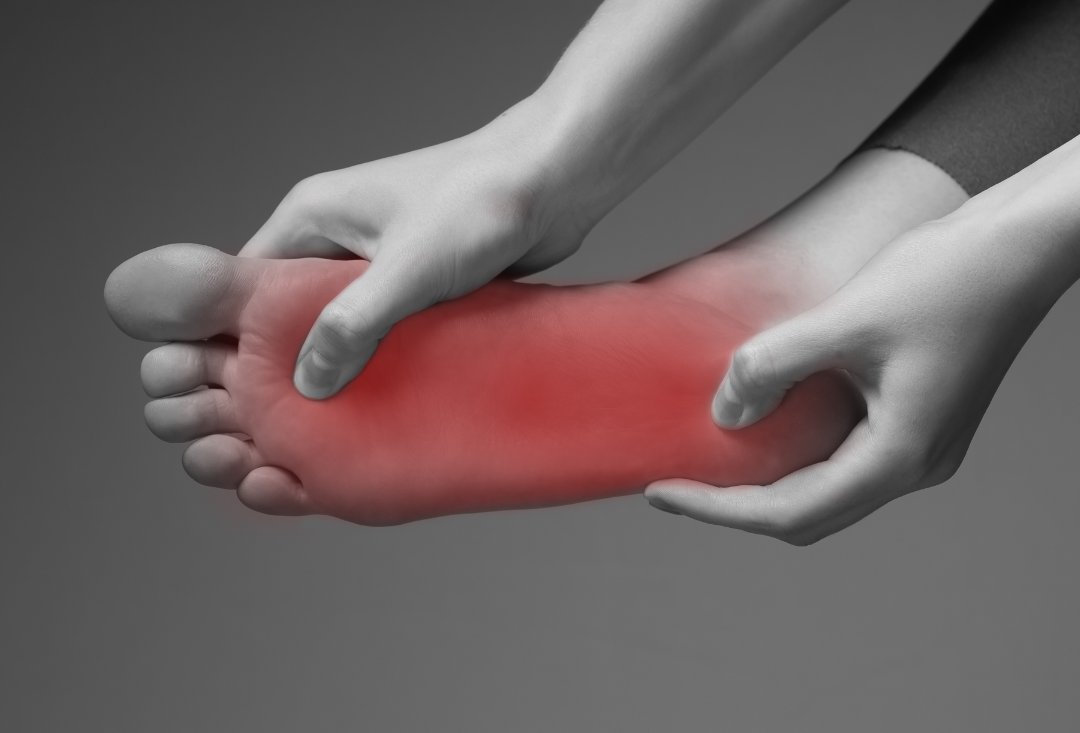
That first step out of bed that feels like a nail in the heel is the most common foot complaint I see in runners, and it is almost always treated at the foot: inserts, night splints, rolling a frozen bottle. Those help some people some of the time, and they miss the cause. The plantar fascia is the bottom of a long chain of tissue that runs up the back of the calf and the hamstring. When the calf is short and the soleus is knotted, the whole chain is on a tight leash, and the thinnest, most exposed part of it, the fascia under your foot, is what tears a little with every stride. I cover the full approach here. The headline is: I work the calf, the deep flexors, the foot itself, and the ankle, and the heel stops hurting because the leash finally has slack in it.
Hamstrings And Hip Flexors: The Desk Job Runner
Most of the runners I see in Greenville sit for eight hours and then go run on the Swamp Rabbit Trail. Sitting shortens the hip flexors and shuts the glutes off. Then you ask that body to sprint up the Paris Mountain hills or hold pace for thirteen miles, and the hamstring has to do its own job plus the job of the glute that went to sleep at the desk. That is how a hamstring gets strained, and it is also how the stubborn ache right at the sit bone starts, the high hamstring pain that never fully goes away with rest. On the front side, a hip flexor that never lengthens pulls the pelvis forward, loads the lower back, and shortens your stride so every other muscle has to work harder.
I treat the hip flexors, the glutes, the hamstring and the fascia around all three as one unit, because that is how they fail. Then I show you the two or three things that keep the hip open between runs. Runners who have been stretching their hamstrings for years and still feel tight are usually tight for a reason, and stretching alone will not undo it.
Calf Strains And The Pull You Felt Mid Run
A sharp pull in the back of the calf, sometimes with a pop, usually in the inner head of the big calf muscle, is a strain. In the first few days that is rest, gentle movement, and patience; I do not dig into a fresh tear. After that window, it is my territory. A strained calf heals with scar tissue that is stiffer than the muscle around it, and if nobody works that scar back into functioning tissue, the calf stays short, the Achilles below it and the knee above it start to complain, and the next strain happens at the same spot a few months later. Breaking that cycle is most of what I do with calves.
Why Rest Does Not Fix It
Rest works on the symptom. The bone calms down, the tendon cools off, the pain fades. Rest does nothing to the knotted soleus, the sleeping glute, or the hip flexor that shortened over the summer, so the second you go back to the mileage that hurt you, the same muscle overloads the same tissue and you are back where you started, a month behind on training. That cycle is why I see runners who have had the “same” shin splints three seasons in a row. Finding the muscle and fixing it ends the cycle. Everything else manages it.
What A Visit Looks Like If You Run
I watch you walk and I watch you move before I put a hand on you, because your stride tells me where the chain is failing before you finish describing the pain. Then I confirm it with my hands and go to work on the actual cause with trigger point therapy and myofascial release: specific, sustained pressure on the exact tissue that is pulling, not a general rub on a sore leg. You leave knowing what is behind it, what it will take, and when you can run. Most running injuries are a handful of visits, not a season. One thing I will always tell you straight: pain in one small spot on the bone that hurts at rest or at night, or swelling that does not go down, is not a muscle problem and needs imaging before anyone works on it. Everything else on this page is mine.
Greenville Runners, The Calendar Is Not Slowing Down
The Paris Mountain trail races are in early November, the Turkey Day 8K is Thanksgiving morning, and the Swamp Rabbit Trail is full every morning it is not raining. If something started hurting during Spinx, this is the week to deal with it, not the week before your next start line. And if you are healthy, this is also when my maintenance patients come in: a tune up between races so the calf, the hip, and the hamstring never get far enough gone to become an injury. Either way, the booking link is below and it takes thirty seconds. I would rather see you now for one visit than in January for eight.