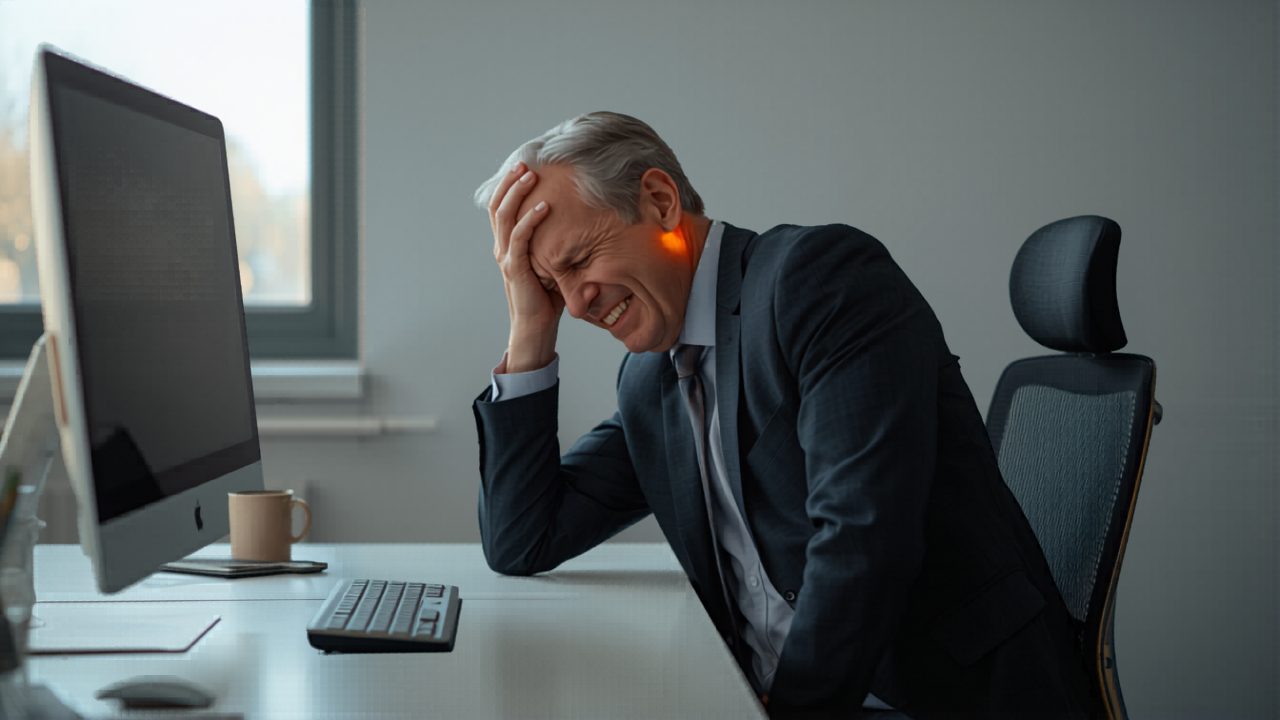
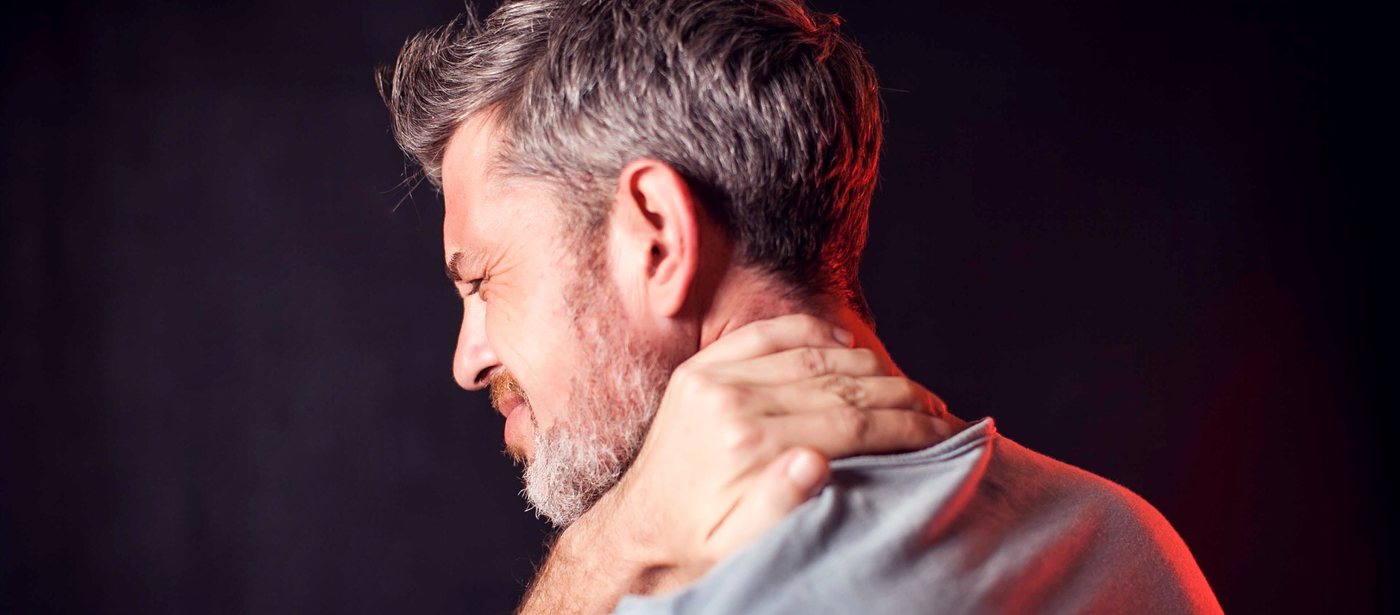
Monday morning, first patient, same sentence I have heard a thousand times on this table: “My neck is killing me and I think I am clenching my jaw at night.” Those two things are not a coincidence and they are not two problems. The neck and the jaw are one system. The same muscles that hold your twelve pound head over a laptop all day are wired to the muscles that close your teeth, and when one side of that system locks down the other side follows. The research backs up what I see every day: people with neck pain are more than three times as likely to have a jaw disorder than people without it, and most of them have tender, knotted muscles in the jaw and the side of the head when you go looking. This article walks you through each muscle in that chain, what it feels like when that specific muscle is the problem, and exactly what I do about it. I have been a Licensed Neuromuscular Therapist in Greenville for over ten years. Necks and jaws are the thing I work on most.
The Suboccipitals: The Headache At The Base Of Your Skull
Put your fingers where your skull meets your neck, right at the top, and press. If that spot is tender and the ache runs up into the back of your head or settles behind one eye, you have met the suboccipitals. These are four small muscles on each side, no longer than your thumb, and they do one job all day: they make the tiny adjustments that keep your eyes level while your head is tipped forward. Every minute you spend looking at a screen with your chin poked out, they are working. They never get a break and they never get touched, because they sit under the big muscles everyone rubs. When they lock, they squeeze the nerve that runs through them, and you get the classic headache that starts at the base of the skull, wraps over the top, and parks behind the eye. People think it is sinus. People think it is their eyes. It is four little muscles. I release them with slow, sustained pressure and a very specific angle of the head, and the headache that has been around for weeks usually lets go on the table.
Upper Trapezius: The Knot Everyone Rubs And Nobody Fixes
This is the muscle between your neck and your shoulder, the one your spouse digs into while you watch TV and the one the massage gun lives on. It is also the one that refers pain straight up the side of the neck and into the temple, which is why so many “neck” headaches start here. The upper trap is a stress muscle and a posture muscle at the same time. When you are anxious it hikes your shoulders toward your ears without asking you. When your head drifts forward it has to hold the weight. Rubbing the knot feels good for about an hour and then it is back, because the knot is not the problem, the load is. In a session I take the load off first: I release the muscles that pulled the head forward, I work the trap from its attachment on the skull down to the shoulder blade, and then I hold the trigger point until it stops firing. Then it stays released, because nothing is yanking on it anymore.
Levator Scapulae: Why You Cannot Check Your Blind Spot
If turning your head to back out of a parking spot sends a sharp catch into the top corner of your shoulder blade, that is the levator scapulae. It runs from the top four vertebrae of your neck down to the inside corner of the shoulder blade, and it is the muscle that gets you when you wake up with a “crick” after sleeping wrong. Phone between your ear and shoulder, a monitor off to one side, a long drive down 85 with your head turned toward the mirror: all of it shortens this muscle until it locks and refuses to let your head rotate. Most people stretch it, which irritates it. I find the knot right where the muscle twists on its way to the shoulder blade, release it, and work the attachment on the blade itself, which is where it usually hides. Rotation comes back in the same visit.
Sternocleidomastoid: The Neck Muscle That Hurts In Your Face
The sternocleidomastoid, the SCM, is the thick rope that runs from behind your ear down to your collarbone, the one that stands out when you turn your head. It is the great imposter of the neck. Trigger points in the SCM do not hurt in the neck. They send pain into the forehead, deep into the eye, into the cheek, into the ear, and along the jaw. They can make you feel lightheaded when you turn your head. They can make your eye water on one side. I have had patients who went through sinus treatment, eye exams, and a dentist visit for a toothache that was never a tooth before anyone touched this muscle. The SCM tightens from forward head posture, from whiplash even years later, and from breathing high in the chest when you are stressed, because it is also a muscle that lifts the ribcage. Releasing it has to be done carefully, there are structures underneath it that do not like pressure, and I work it between my fingers rather than pressing into the neck. When it lets go, the pain that lived in your face goes with it.
Scalenes: Tingling Fingers That Are Not A Disc
Three muscles on the side of the neck run from the vertebrae down to the first two ribs. The nerves and the artery for your whole arm pass right between them. When the scalenes are tight, from stress breathing, from carrying a bag on one shoulder, from the same forward head everything else comes from, they close that gap and the arm pays for it: aching into the shoulder blade, down the front of the arm, numb or tingling fingers, a hand that falls asleep at night. People hear “numb fingers” and assume disc, and sometimes it is. But a disc problem has a pattern and the scalenes have a different one, and in my experience the muscle is the answer far more often than the imaging is. I check both. If it is the scalenes, I release them and the breathing pattern that keeps them tight, and the tingling usually fades over the next few days as the nerve calms down.
Your jaw is a neck muscle that happens to close your teeth. Treat one without the other and the pain comes back.
Masseter, Temporalis And The Pterygoids: Your Jaw Is A Neck Muscle Too
Four muscles close your jaw, and for their size they are the strongest muscles in your body. The masseter is the slab at the angle of your jaw that bulges when you bite down. The temporalis fans across the side of your head above the ear. The two pterygoids sit deep behind the jaw where you cannot reach them from outside. When you clench or grind, usually at night, usually under stress, these muscles work for hours with no rest, and they build trigger points like any other overworked muscle. A masseter trigger point feels like a toothache in a healthy tooth. A temporalis trigger point feels like a headache in the temple. Pterygoid trigger points feel like ear pain, ear fullness, and a jaw that clicks or will not open all the way. Here is the part that ties this article together: the jaw muscles and the neck muscles are controlled as one unit. When your head sits forward, the jaw muscles have to work harder just to keep your mouth closed. When your jaw clenches, the SCM and the suboccipitals brace with it. I never treat a jaw without treating the neck under it, and I never treat a neck with a headache without checking the jaw. I work the masseter and temporalis from outside and, with a glove, the pterygoids from inside the mouth, which is the only way to actually reach them. If you want the deeper version of this, I wrote a full article on TMJ and jaw pain relief.
Why The Neck And Jaw Lock Up Together
Three things drive almost every case I see. The first is forward head posture: phone, laptop, steering wheel. For every inch your head sits in front of your shoulders, the muscles behind it carry noticeably more load, hour after hour, and the jaw tightens to keep up. The second is clenching. Most people do not know they do it until I press on the masseter and they jump. The third is stress breathing, high in the chest, which recruits the SCM and scalenes as breathing muscles thousands of times a day when they were never meant to be. Stack those three and you get the patient who has a stiff neck, a tight jaw, a headache behind the eye, and a hand that goes numb at night, and who has been told four different things by four different people. It is one pattern, and it responds to one approach: find each muscle in the chain that is locked, release it, and take away the load that locked it.
Why Stretching, Pillows And Massage Guns Do Not Hold
You have tried them, so I will be plain. Stretching a muscle that has an active trigger point in it usually irritates it; the knot does not stretch, the healthy fibers around it do, and the knot pulls harder when you let go. I wrote about why stretching alone does not fix tight muscles and it applies doubly to the neck. A new pillow changes the angle you sleep at, which helps for a week, and then the muscles adapt and you are back where you started. A massage gun on the upper trap feels incredible and does nothing for the suboccipitals, the SCM, the scalenes, or the pterygoids, which is where the pain is actually coming from, and you should never put one on the front or side of your neck. Ice and heat change how it feels for twenty minutes. None of these find the muscle. Finding the muscle is the whole job.
When It Is Not Muscle
I will say this in every article because it matters. Most neck and jaw pain I see is muscular and it gets better. Some is not, and I will tell you if I think yours is. Get it looked at and imaged first if you have weakness in an arm or hand that is getting worse, numbness that is spreading, pain that started with a car crash or a fall and has not eased, a jaw that has locked open or shut, fever or unexplained weight loss along with the pain, or a headache that is the worst of your life or came on like a thunderclap. Those are not for my table. Everything else in this article is.
What A Visit Looks Like For Neck And Jaw Pain
Your first visit is a full sixty minutes, one on one with me, and the first part of it is me asking questions and pressing on things while you tell me where it travels. That map is how I find the muscle, because the place you point to is almost never where it starts. Then I work: suboccipitals and the base of the skull, upper traps from the skull to the blade, levator at its twist and its attachment, SCM between my fingers, scalenes with your breathing, and the jaw muscles outside and, if you are comfortable with it, inside. Pressure is firm and specific, never a fight. Most people feel the headache fade and the rotation come back before they get off the table. I send you home with the two or three things that are loading the chain, usually something about your screen, your sleep, or your clenching, and we plan from there. Some necks are done in two visits. The ones that have been locked for years take a few more. I will tell you which you are after the first one.
Greenville, Your Neck Is Telling On Your Week
I can usually guess the job from the neck. The downtown office crowd comes in with suboccipitals and upper traps on fire from two monitors. The nurses and the physical trades come in with one side locked from carrying and reaching. The people who sit in traffic on 385 and 85 every morning have a levator that will not let them check the mirror. And the clenchers, which lately is most of us, bring the jaw with it. If you are reading this with your head tipped down at your phone, you already know which muscles are working right now. First visit is sixty minutes, no referral needed, and you can book it online in about thirty seconds. If you want the shorter overview first, start with my neck pain treatment article or the one on headaches and the muscles behind them. Then come let me find yours.