Walk through a house with a bad foundation and you will see it everywhere except the foundation. A crack runs up the wall from the corner of a door. A window sticks. A marble rolls across the kitchen floor by itself. You can patch that crack and paint over it, and in a year it is back, because the wall was never the problem. The ground under the house moved, and everything built on top of it moved with it. Your body is built the same way. I am a Licensed Neuromuscular Therapist in Greenville, and a large share of the knee, hip, and low back pain I work on starts in the one place nobody thinks to look: the feet. This article explains how your foundation shapes everything above it, why muscle work alone sometimes will not hold, and where custom orthotics fit.
A House Is Only As Straight As Its Foundation
A builder does not start with the roof. The foundation goes in first and it goes in level, because every wall, floor, and beam after it takes its line from that base. If one corner settles an inch, nothing above it is square anymore. The frame twists to make up the difference, and the stress shows up far from where it started. Your feet do that job for you. Each foot has 26 bones and 33 joints, and together they carry your full weight with every step, thousands of steps a day. When they hold their shape, the load travels up through the ankle, knee, hip, and spine in a straight line. When they do not, every joint above has to lean a little to keep you upright, and it has to do it all day.
Your Foot Has Three Arches, Not One
Ask most people about their arch and they point to the inside of the foot. That is one arch out of three. The second runs along the outside edge of the foot, from the heel to the little toe. The third runs across the ball of the foot, behind the toes. Together the three form a tripod, like the legs under a camera, and a tripod only stands level when all three legs hold.
This is where a lot of people get fooled. I hear it all the time: "I have a high arch, so my feet are fine." Often the inside arch does look high. But when I look at the whole foot, the other two have collapsed. The outside edge has flattened and the ball of the foot has spread, and the inside arch only looks tall because everything around it has dropped. A foot like that is not strong. It is standing on one leg of the tripod. That is why you cannot judge a foot by one arch, and why a support that only props up the inside arch misses two thirds of the problem.
Years of hard floors, flat shoes, old ankle sprains, extra weight, and plain mileage flatten those arches a little at a time. It rarely hurts in the foot while it is happening, which is why it goes unnoticed. And it almost never happens evenly. One foot usually drops more than the other, and that is the tilted corner of the house.
What Happens Upstairs When An Arch Drops
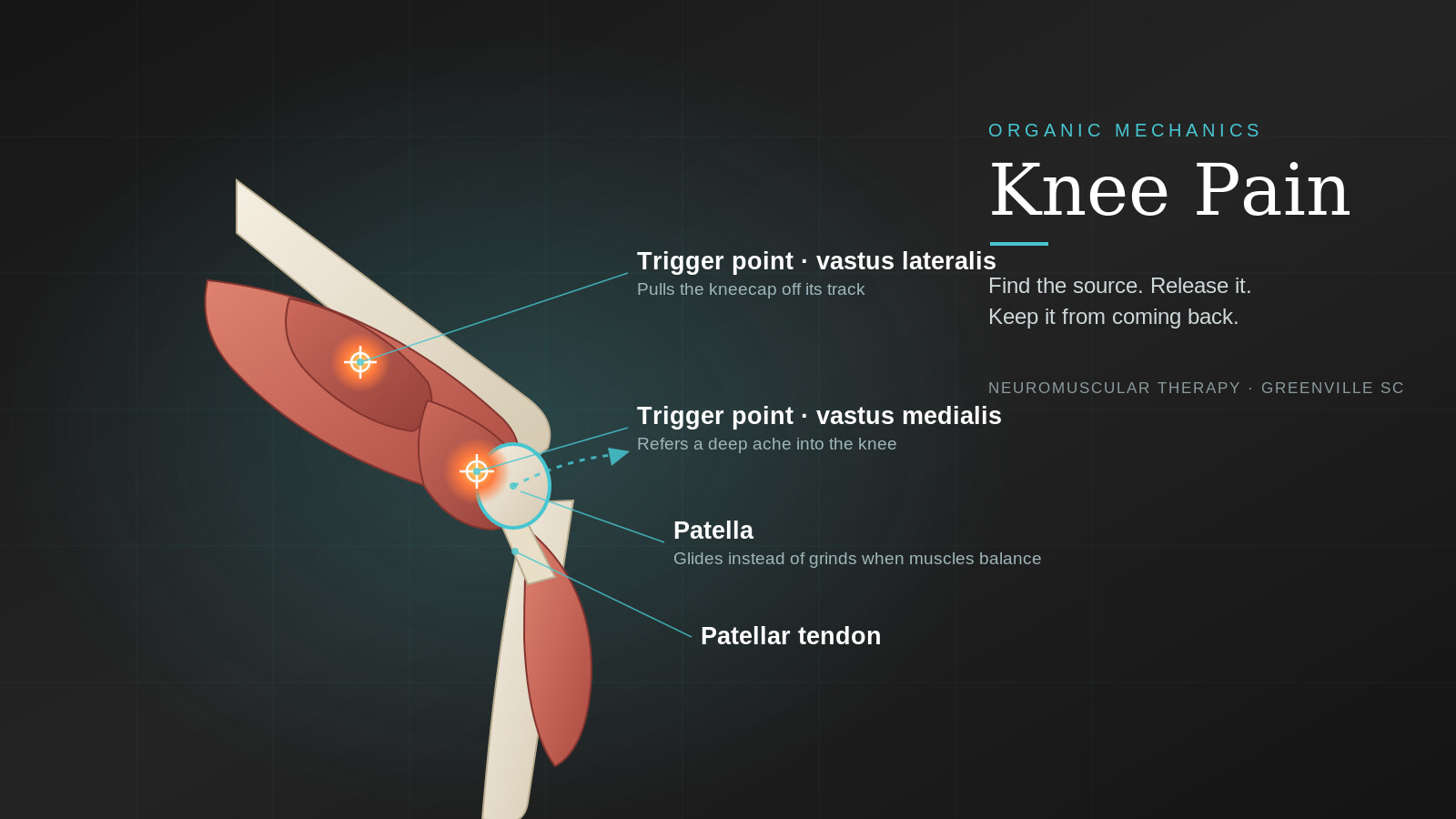
Follow it up the frame. When the inside arch drops, the foot rolls inward. The shin bone sits on top of the foot, so it turns inward with it. The knee is now being twisted from below while the thigh tries to keep it straight, and the inside of the knee and the kneecap take the strain. The thigh bone follows the shin and turns in at the hip, so the muscles on the outside of the hip have to work overtime to hold the leg in line. The pelvis sits on both hips, so when one side drops lower than the other, the pelvis tips. The spine is stacked on the pelvis, so the low back bends to bring you upright again. Then the shoulders and the neck make the last correction so your eyes stay level. That is a cracked wall two floors up from a settled corner. It is why I look at the feet when someone comes in for a knee that aches on stairs, a hip that pinches, or a low back that is always tight on the same side. I wrote more about two of those patterns in my articles on runner's knee and IT band pain and on why your back hurts every morning.
You can patch the crack in the wall as many times as you like. Until the foundation is level, the crack comes back.
Why Muscle Work Alone Keeps Wearing Off
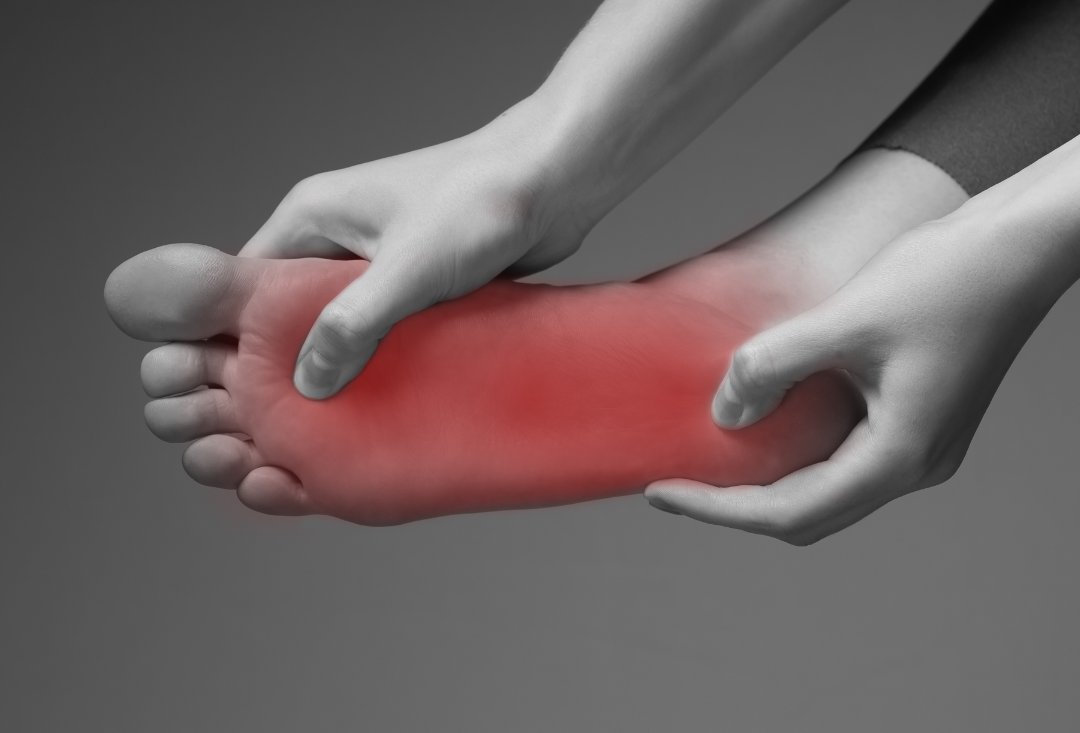
This is the part most people have never been told. Pain like this is muscular and it is structural, and the two are not the same thing. The muscles are the crew holding up a leaning wall. The muscle along the inside of the shin strains to lift the fallen arch. The calf tightens. The band down the outside of the thigh pulls. The deep muscles of the hip and the low back grip to keep the pelvis from tipping further. They are doing exactly what they should, and they are worn out from doing it. I can release every one of them, and you will feel better when you get off the table. But if you stand up onto the same tilted base, the crew goes right back to work, and in a week or two the tightness returns. That is not the treatment failing. That is a structural problem being asked to hold a muscular fix. The reverse is true too. An orthotic levels the base, but it does not release muscles that have been locked short for years. You need both, in the right order: level the foundation, then straighten the frame.
Signs Your Foundation Is Off
You can check some of this at home. Look at the heels of a pair of shoes you have worn for a while. If one is worn down more than the other, or both are worn on one edge, your feet are not loading evenly. Stand barefoot and look down. If one foot turns out more than the other, or one arch sits closer to the floor, that is a clue. So are knees that drift toward each other when you squat, a bunion or a thick callus on one foot, shin or arch pain after standing, and one hip or one shoulder that sits higher in the mirror. The clearest sign of all is pain that responds to treatment and then keeps coming back in the same place on the same side.
How I Check It: The Foot Scan
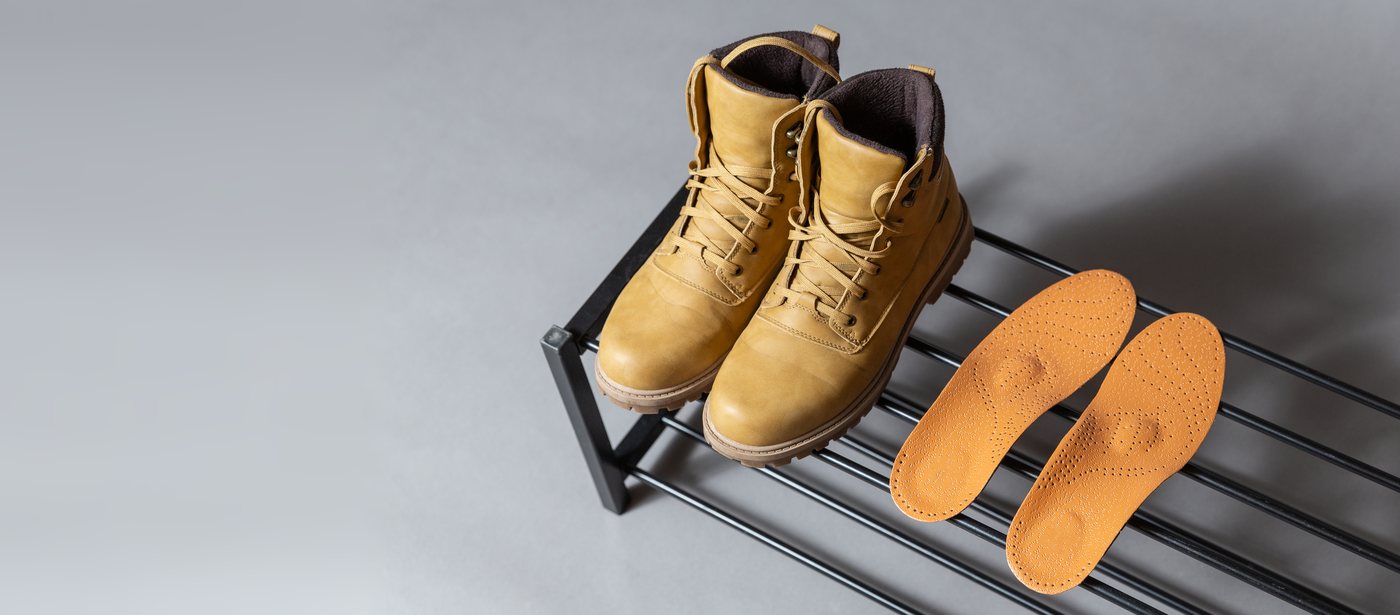
I do not guess at this. In the office you stand on a Foot Levelers scanner, and in a few seconds it maps how each foot carries your weight and how each of the three arches is holding. You see the picture on the screen, both feet side by side, and the difference between them is usually plain. From that scan Foot Levelers builds a pair of custom orthotics made for your two feet, which are almost never a matching pair. They slide into the shoes you already wear, and there are sandals and flip flops built on the same scan for the months when you live in them.
What Orthotics Do, And What They Do Not
A custom orthotic supports all three arches so the foot holds its shape under load. That gives the ankle, knee, hip, and spine a level base to stack on, step after step, for the sixteen hours a day you are not on my table. It does not cure anything and it is not a treatment for disease. It is a level foundation. An insert off the shelf at the drugstore is built for an average foot and supports one arch. It can feel soft, but it treats both of your feet as if they were the same foot, and they are not. Give a new pair a little time. Your body has been leaning for years, and standing level can feel strange for the first week or two. Most people wear them a few hours a day at first and build up from there. If foot pain is what brought you here, my article on a combination approach to plantar fasciitis walks through how the two pieces work together.
Foundation First, Then The Frame
Here is how I put it together. Your first visit is a full sixty minutes, one on one with me. I look at how you stand, how your feet load, and how your knees, hips, and shoulders line up, and I find the muscles that are doing the holding. If the scan shows your foundation is part of the problem, I will tell you plainly, and if it is not, I will tell you that too. Then we treat the frame: the shin, the calf, the hip, the low back, whatever has been straining to keep you upright. With a level base under you, the releases hold, and that is when pain that has been coming back for years finally stays gone.
Orthotics Are Part Of Ongoing Care, Not A One Time Purchase
I want to be plain about how this works in my practice, so nobody is surprised. Custom Foot Levelers orthotics are available only to my active patients. That is written into my practice policies, which every patient reads and agrees to before booking, and custom orders cannot be refunded, because they are built for your feet and nobody else's.
There is a reason for it. I am not a shoe store, and an orthotic is not something you pick up on the way out. This is ongoing treatment. Coming in once or twice, buying a pair, and never coming back does not fix a foundation, and it is not how I work. When the base under you changes, everything above it starts to shift, and that takes time. Muscles that have been holding a lean for years have to be released as your frame settles into the new line. I need to see how you are standing a month in, how your knees and hips are tracking, and whether the fit is still right. The orthotic does its part every step you take. The table work does the rest. One without the other is half a repair.
So if you are looking for a quick pair of inserts, I am the wrong office, and I would rather tell you that now. If you want the problem found and fixed from the ground up, that is exactly what I do.
Greenville Stands On Hard Floors
Think about who is on their feet around here. Nurses and techs on twelve hour shifts. Line workers on concrete at the plants in Greer and Spartanburg. Teachers, servers, stylists, and everyone working a retail floor on Woodruff Road. Runners on the Swamp Rabbit Trail and hikers coming down from Paris Mountain. All of them are standing on the same thing you are. If your knees, hips, or low back keep flaring on the same side no matter what you do for them, come find out whether the problem is in the wall or under it. First visit is sixty minutes, no referral needed, and you can book it online in about thirty seconds.